The Old Fashioned: a short history of the original cocktail
The Old Fashioned isn't just old, it's literally the original cocktail. Here's how the 1806 definition of the word became a drink, and why the Pendennis Club myth is wrong.



The Old Fashioned isn't just old, it's literally the original cocktail. Here's how the 1806 definition of the word became a drink, and why the Pendennis Club myth is wrong.
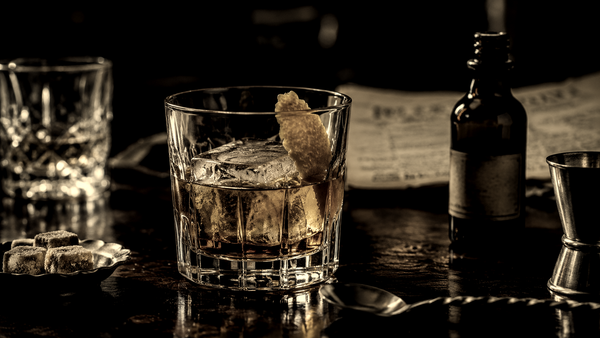
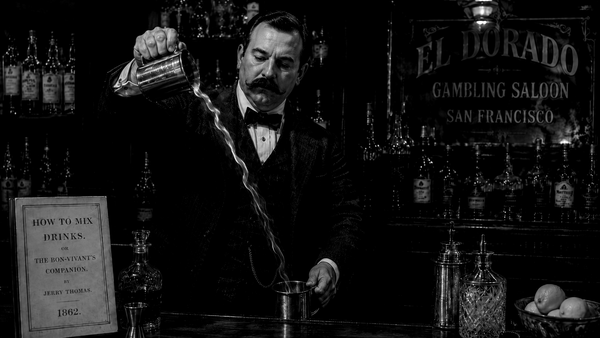
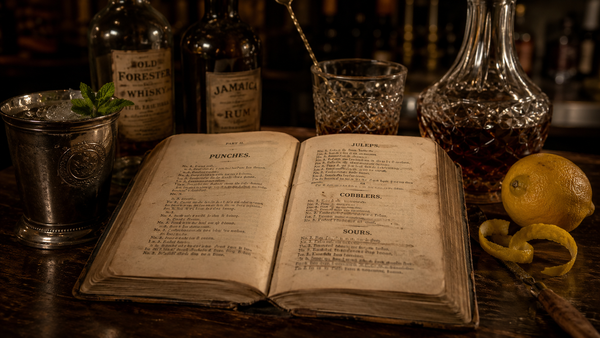
For the first half of the nineteenth century, that four-part formula simply was the cocktail. In 1833, a traveler described the same drink: rum, gin, or brandy with water, bitters, sugar, and a little nutmeg. By the time Jerry Thomas published the first bartender's guide in 1862, "cocktail" still meant this narrow thing, a short drink of spirit, sugar, water, and bitters, and his book gives it its own small section, which we walk through in detail in our look inside the 1862 guide. What changed over the following decades was fashion. Bartenders began dressing the cocktail up with curaçao, absinthe, and other liqueurs, and "cocktail" stopped meaning one specific drink and started meaning almost any mixed drink.
That is where the name comes from. By the 1880s, some drinkers had tired of the increasingly elaborate concoctions and began asking for their cocktail made the plain, old way: spirit, sugar, bitters, a twist, and nothing else. They wanted it made old-fashioned. The name described an attitude before it described a fixed recipe, a request to go back to basics. The plainest, oldest cocktail had outlived the trend that passed it by, and it took on a new name that was really its old one.
You will often read that the Old Fashioned was invented in the early 1880s at the Pendennis Club, a gentlemen's club in Louisville, by a bartender honoring the bourbon distiller Colonel James E. Pepper, who then carried it to New York's Waldorf-Astoria. It is a good story, though not quite true. The claim traces to a Waldorf-Astoria writer recounting it decades later, in the 1930s, and the record contradicts it: newspapers were already referring to "old fashioned cocktails" before the Pendennis Club was even founded in 1881. The likeliest truth is more modest and more interesting. The club may well have served an excellent bourbon version and helped standardize it, but it did not invent a drink that was already three-quarters of a century old. This is worth getting right, because the myth is repeated so often that correcting it is its own small service to the record.
The Old Fashioned was not always a whiskey drink. The early versions were made with whatever spirit was on hand, gin, brandy, rum, or whiskey, and only later did American bourbon and rye become the default, helped along by Kentucky's distillers and by George Kappeler's 1895 recipe for an "Old-Fashioned Whiskey Cocktail" that looks much like the one bartenders build today. A few regional variations still carry the older, wider idea, most famously the brandy Old Fashioned of Wisconsin, which is not a mistake but a genuine survival from the days when the spirit was a matter of local taste.
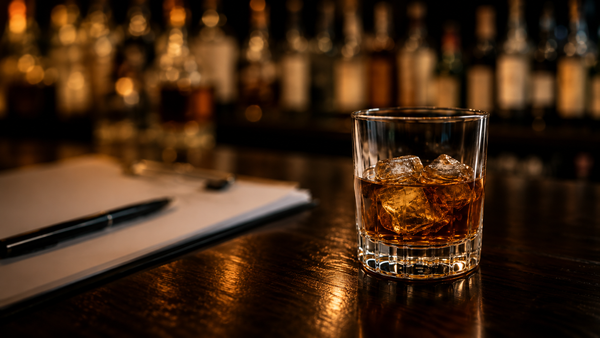
For bartenders, the Old Fashioned is not just another classic on the menu; it is the baseline the entire craft is measured against. Learn to build one well- spirit, a touch of sweetness, good bitters, a citrus twist, ice, and no hiding place- and you understand the structure underneath almost every drink that followed. It nearly vanished, then came roaring back with the craft-cocktail revival and a boost from Don Draper's on-screen habit in Mad Men, and it has topped international polls of the best-selling classic cocktail year after year since. Two centuries after a newspaper editor tried to define a word, the drink he described is still the one people order when they want the real thing. For the bartender who first gathered the cocktail into a book and helped fix its definition, see our profile of Jerry Thomas, the father of American mixology.